
Conserving and Preserving the Environment(Initiatives for TCFD/TNFD recommendations)
Initiatives for TCFD/TNFD recommendations
The Group recognizes the important responsibility of conserving and preserving the environment and understands that climate change and nature are closely interrelated. In December 2019, the Group endorsed the recommendations of the Task Force on Climate-Related Financial Disclosures (TCFD)*1, and in February 2024, participated in the Task Force on Nature related Financial Disclosures (TNFD)*2 Forum. Since then, the Group has been disclosing its views and approaches on climate change and nature in an integrated manner based on the respective frameworks.
Recognizing the importance of formulating and disclosing a transition plan, in FY2025, the Group participated in the “FY2025 Program to Support the Development of Transition Plans for Achieving a Decarbonized Society (for Regional Financial Institutions)”, implemented by the Ministry of the Environment, and started to formulate its transition plan. Going forward, we will organize the relationship between our transition plan and company-wide strategies and policies, and formulate and disclose our transition plan in order to achieve both the transition to a decarbonized society and enhancement of corporate value.
- *1Task Force on Climate-Related Financial Disclosures: A private-sector-led task force established by the Financial Stability Board (FSB) in December 2015 to encourage companies to disclose climate-related information
- *2Task Force on Nature-related Financial Disclosures: A private-sector-led initiative launched in June 2021 to encourage companies to disclose nature-related information

| Climate | Nature | |
|---|---|---|
| Governance |
|
|
| Risk management (Risk and impact management) |
|
|
| Strategy |
|
|
| Metrics and targets |
|
|
|
|
|
Governance
Risk management
Within the Group, each subsidiary establishes a risk control department as well as a risk management department for each type of risk, thereby identifying, evaluating, and managing risks. The Risk Management Department at the holding company comprehensively manages risks for the entire Group, and an officer in charge of risk, who is not the General Manager of the Internal Audit Department, regularly reports on the risk status to the President and Representative Director and the Board of Directors. Matters related to sustainability are discussed separately by the Group Sustainability Committee, and the details of the discussions are reported to the Board of Directors.
Sustainability risks have characteristics such as a long time horizon before they emerge, high uncertainty regarding their impact and their spread across multiple risk categories. Based on these characteristics, the Group has established the Basic Policy for Sustainability-Related Risk Management, and identifies, evaluates and manages sustainability-related risks. Selected sustainability-related risks are also considered as risk events when selecting top risks.
Furthermore, the Group has identified and evaluated sustainability-related opportunities by materiality in the medium term management plan (FY2025 to FY2027), set KPIs, and implements specific initiatives. Progress on KPIs is regularly reported to the Board of Directors, who will follow up as necessary.
Top risks
We assess risks that could greatly affect the Group’s operations, judging their significance by impact and likelihood. The Board of Directors then identifies the most critical risks as “top risks.” For top risks, we set Key Risk Indicators (KRIs) and monitor them continuously to spot early warning signs. We have also arranged systems to respond swiftly if a risk becomes evident. Risks related to sustainability such as climate change are also positioned as “top risks.”
We will continue to work to build a system that can be managed within the framework of comprehensive risk management.
Sector Policy
The Group has established the Sector Policy for investments and loans that take environmental and social considerations into account. Regarding investments and loans for purposes that are highly likely to exacerbate negative impacts, the Sector Policy sets out businesses for which investments and loans are prohibited on a cross-sectoral basis, businesses that require caution regarding investments and loans on a cross-sectoral basis and a policy on initiatives for specific sectors. Through these, we strive to reduce and avoid negative environmental and social impacts.
The Group Sustainability Committee regularly discusses the necessity of revisions and reviews the Sector Policy as needed in response to changes in our own business activities and the external environment.
Overview of Sector Policy
The Group will actively engage in investments and loans for purposes that have a positive impact on the environment and society through transactions. In addition, the Group will strive to reduce or avoid negative impacts on the environment and society by carefully judging transactions in relation to investments and loans for purposes that are highly likely to exacerbate negative impacts on the environment and society.
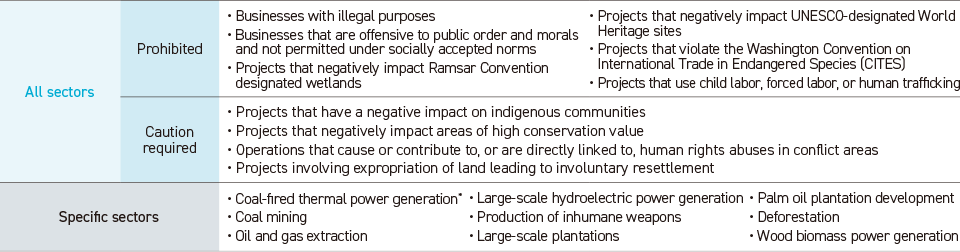
- *Reduction of balance for existing investments and loans for coal-fired thermal power generation to zero is scheduled for FY2037.
Strategy Climate change
The Earth’s environment, on which human life and business activity depend, is being altered by climate change. Natural disasters and extreme weather events are becoming more severe, threatening the sustainable development of local communities and businesses. Against this backdrop, efforts towards transitioning to a decarbonized society are advancing.
In the process of transitioning to a decarbonized society, there are expected to be significant changes in the economy and society, such as stricter policies and regulations in countries throughout the world to achieve carbon neutrality, technological innovation to mitigate climate change, and changes in the values of consumers and investors as a result of greater interest in climate change. We recognize that these changes will lead to both risks and opportunities for the Group, and thus we are examining the impact that the climate-change-driven transition to a decarbonized society will have on our business, while formulating strategies for responding to climate change in order to handle these risks and opportunities.
Strategy Climate change
Understanding climate change risks
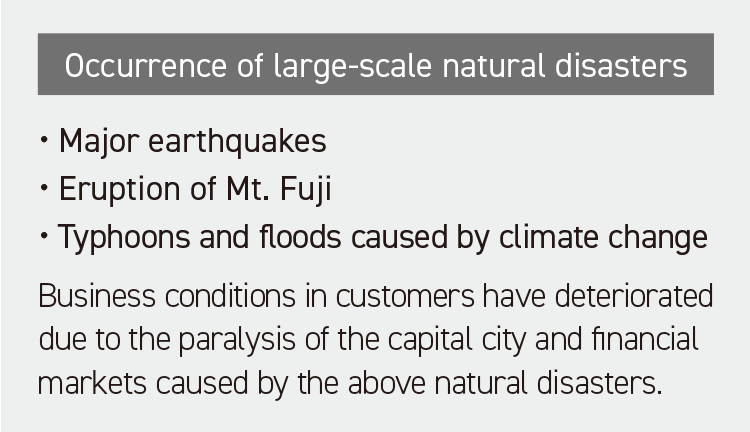
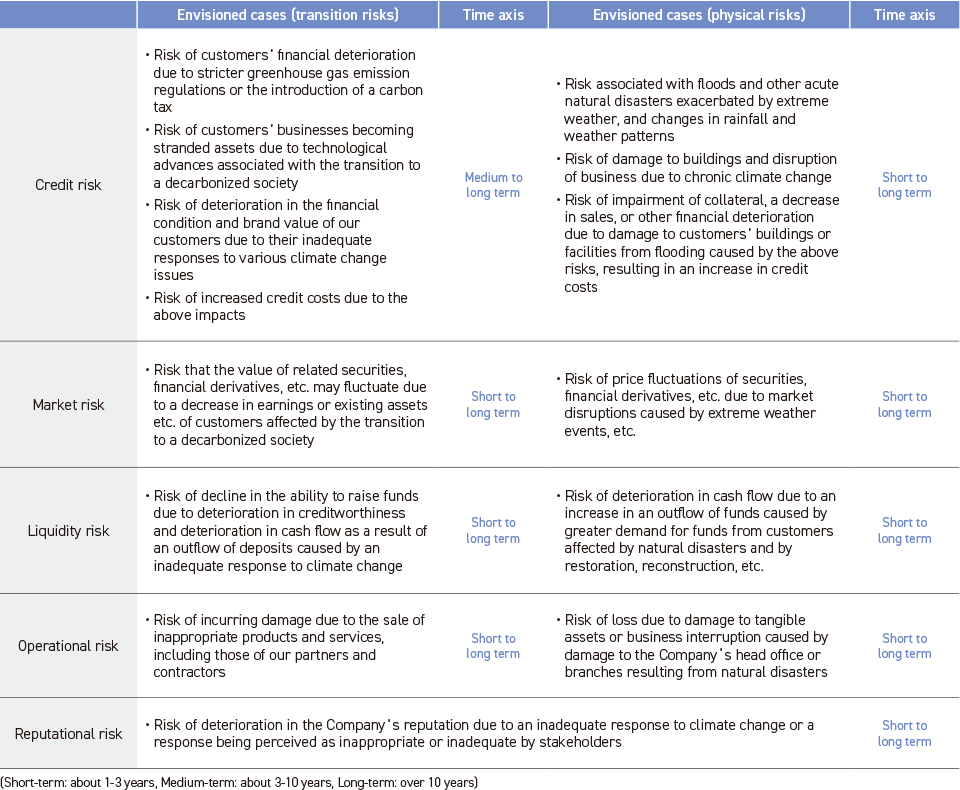
There are two types of risks related to climate change: risks associated with the transition to a decarbonized society (transition risks) and risks associated with severe natural disasters and extreme weather events (physical risks). The Group is working to identify and assess these risks in line with TCFD recommendations. Transition risks and physical risks for each of the risks that the Group categorizes and manages (credit risk, market risk, liquidity risk, operational risk, and reputational risk) are as follows.
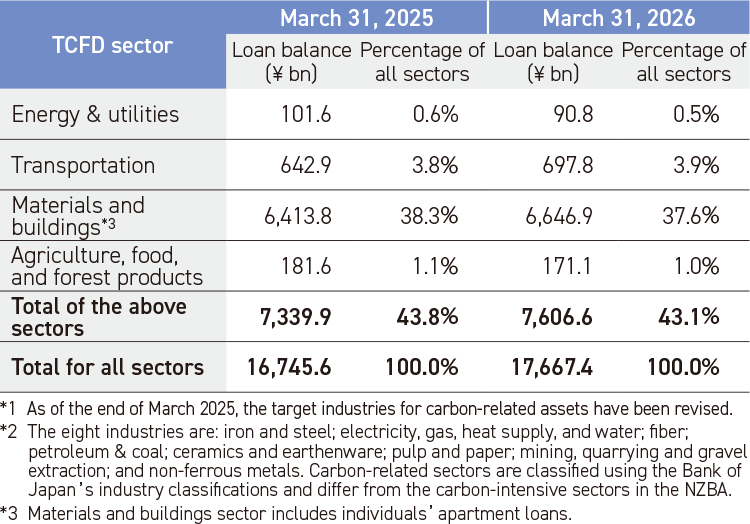
Carbon-related assets
The Group calculates the loan balance of carbon-related assets*1 based on the TCFD recommendations as one of its efforts to identify climate change risks. The table on the right shows the results of this calculation as of the end of March 2026. In addition to carbon-related assets, the Group has defined eight industries that are recognized as being significantly impacted by climate change as carbon-related sectors*2 and has been monitoring them since FY2021. The share of the credit balance for these sectors at the end of March 2026 in the total loan balance for all sectors was 2.2%, which was the same level as FY2024. We will continue to manage risks by monitoring the impact of climate change through our engagement in carbon-related sectors and by increasing the sophistication of our analysis.
Scenario analysis due to climate changes
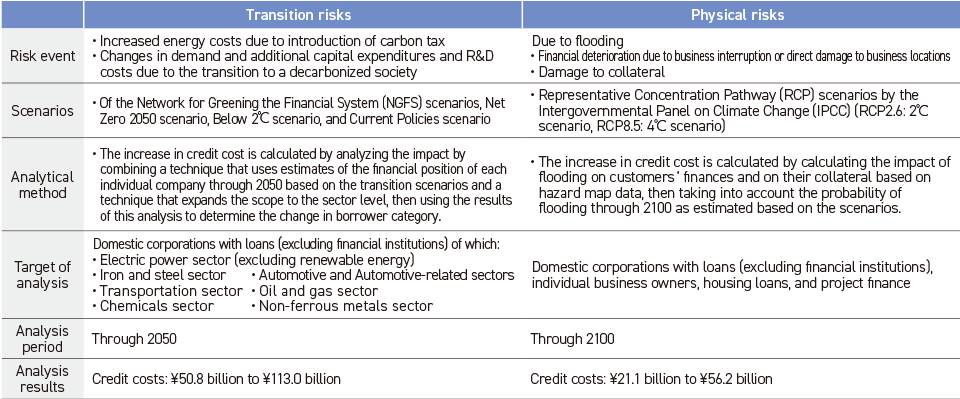
The Group conducts scenario analysis of transition risks and physical risks to understand the degree of impact of climate changes on the investment and loan portfolio. The analysis results as of March 31, 2026 are as follows.
For transition risks, we considered the impact on expenditures such as the introduction of a carbon tax, an increase in energy costs due to a change in the composition of power sources, and capital investment due to GHG emissions regulations. Furthermore, changes in supply and demand due to a decarbonized society are expected to lead to changes in production volumes and prices. Therefore, we analyzed the impact on borrowers’ finances from both revenue and expenditure sides. In addition to the electric power, automotive, and automotive-related*1, oil and gas, iron and steel, transportation*2, and chemicals sector that were analyzed in FY2024, the non-ferrous metals sector has been added in FY2025. As a result, most of the sectors considered to have a large transition risk for the Group were included in the scope of analyses.
For physical risks, flooding is included in the analysis as we consider it a high priority to understand its impact of on the investment and loan portfolio because such disaster, which is aggravated by extreme weather, poses a serious acute risk. We are also working to enhance our analysis by refining the location data of each location to be analyzed, mainly in Kanagawa Prefecture and Tokyo, which are the Group's sales bases.
As a result of the analysis, credit costs*3 for transition risks were estimated to be ¥50.8 billion*4 to ¥113.0 billion*5, and credit costs for physical risks were estimated to be ¥21.1 billion to ¥56.2 billion. We will continue to enhance our scenario analysis, and we will work to reduce these risks with decarbonization initiatives through our engagement with customers.
- *1Automotive-related sector: auto parts, gas stations, etc.
- *2Transportation sector: marine transportation, air transportation, railway transportation, trucking services, etc.
- *3Calculated based on the difference between the Current Policies scenario, in which the current climate change policies are assumed to be continued, and the scenario in which stricter climate change policies are assumed to be implemented.
- *4Difference from the Below 2℃ scenario, which aims to limit global warming to less than 2℃ (Below 2℃ scenario: ¥201.4 billion - Current Policies scenario: ¥150.7 billion)
- *5Difference from the Net Zero 2050 scenario, in which the global net zero is achieved by 2050 (Net Zero 2050 scenario: ¥263.6 billion - Current Policies scenario: ¥150.7 billion)
②Opportunities (climate change)
Calculation of GHG emissions in the investment and loan portfolio
As a financial institution, the Group is a member of the Partnership for Carbon Accounting Financials (PCAF), an international initiative that promotes efforts related to the measurement and disclosure of GHG emissions in investment and loan portfolios, in order to contribute to creating a decarbonized society through the realization of net zero GHG emissions in investment and loan portfolio. The Group also calculates GHG emissions (Financed Emissions) in the investment and loan portfolio, mainly for business loans, based on the standards set forth by the PCAF (hereinafter referred to as the “PCAF Calculation Standards”)
In addition, as a participating company in the GX Future League*, the Group is working to reduce its own emissions while supporting decarbonization initiatives across the supply chain through dialogue with participating companies and contributions to discussions on rule-making.
The Group will continue to contribute to the realization of carbon neutrality by fostering a virtuous cycle among the environment, economy, and society while addressing climate change and other environmental challenges.
- *The GX Future League is an initiative where participants from government, industry, and the financial sector collaborate to create GX demand, achieve emissions reductions across supply chains, and take practical actions to facilitate the smooth provision of GX finance, regardless of industry, business model, or emissions profile.(https://gx-future-consortium.go.jp/gxfl-general/)
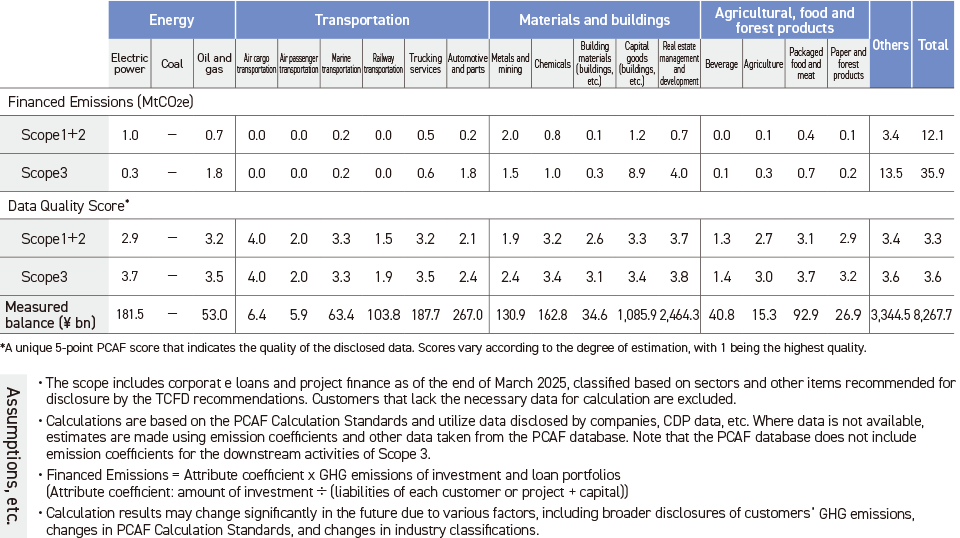
Engagement with customers to achieve net zero GHG emissions for our investment and loan portfolio
Based on the results of the GHG emissions calculations for our investment and loan portfolio, we developed an action plan to help our customers reduce their GHG emissions toward net zero. The details are as follows.
1. All sectors
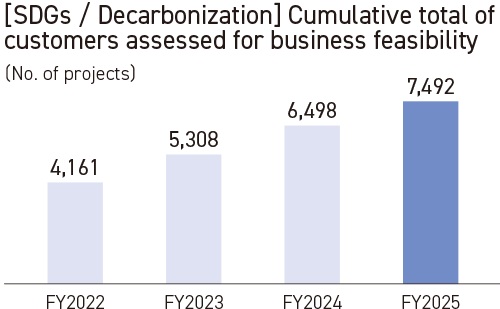
The Group uses SDGs business feasibility assessments*1 and decarbonization business feasibility assessments*2 to engage with customers, organize and share management issues related to sustainability, including decarbonization. The Group will continue to support sustainability management by providing optimal solutions to our customers' decarbonization and other management issues through engagement.
- *1Initiatives to add SDGs-related items to business feasibility assessments and score them for use in strategy planning and policy proposals
- *2Business feasibility assessments focused on customers ’ management challenges related to decarbonization
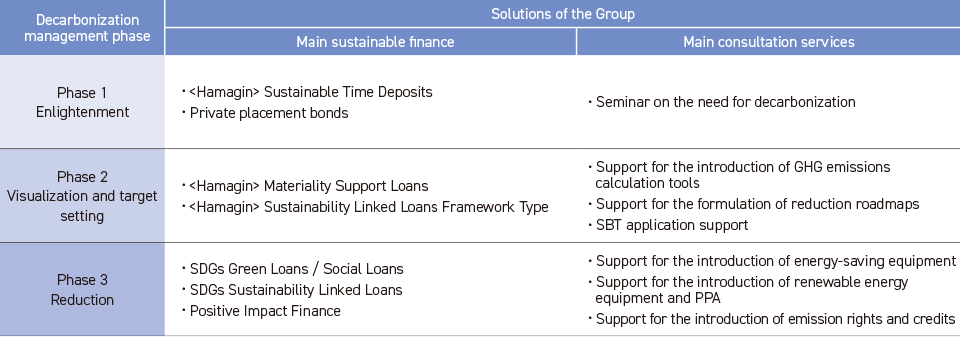
- Providing optimal solutions according to the customer’s initiative phase
The Group recognizes that it is important to engage with customers to share the challenges they face in order to reduce transition risks and physical risks and to expand opportunities for growth, to enhance the lineup of solutions that contribute to solving their challenges, and to provide optimal solutions that meet the needs of each customer. The main types of support provided by the Group according to the customer's phase of decarbonization management are as follows.
- Expansion of sustainable finance for small and medium sized businesses
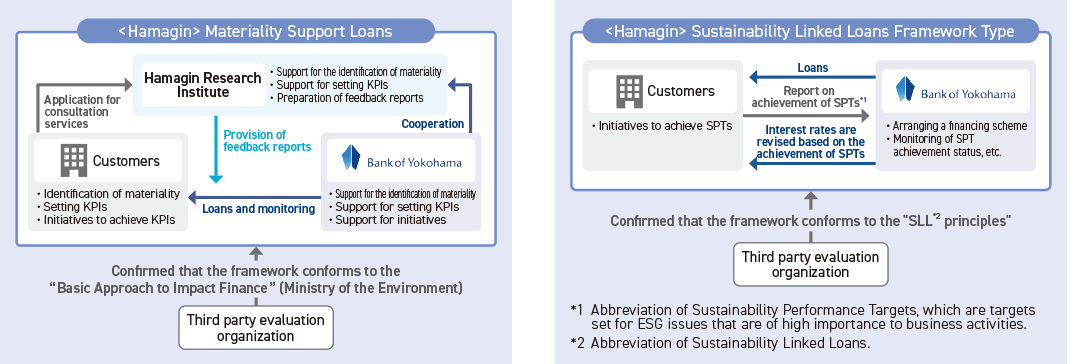
For our small and medium sized business customers, advanced sustainable finance, which requires individual acquisition of external evaluations, is difficult to use as a financing method due to the high cost and practical burden associated with the external evaluation process. To address these challenges, the Bank of Yokohama has formulated a framework where the bank obtains external evaluations, thereby providing sustainable finance with less burden on the customers to acquire external evaluations. In FY2024, we launched the “<Hamagin> Materiality Support Loans,” which combines “loans” and “materiality identification consultation services” and in FY2025, we launched the "<Hamagin> Sustainability Linked Loans Framework Type," in which the interest rate applied varies depending on the achievement of “calculation and reporting of GHG emissions" and "SBT certification." We will continue to support the sustainability management of our small and medium sized business customers through sustainable finance and consultation services.
2. Sectors with GHG emission reduction targets set
The electric power, coal, and oil and gas sectors have a high carbon intensity in the Group’s portfolio. Therefore, the Group has selected these three sectors as “sectors with GHG emissions reduction targets” and has set interim targets for FY2030. We will provide support for visualizing and reducing GHG emissions through detailed engagement with individual companies.
3. Priority sectors for engagement
The automotive and parts sector has led the way in analyzing scenarios for transition risks and engaging with the industry’s outlook. Since the supply chain is extensive and decarbonization efforts are expected to take a long time, we designated it as a priority sector for engagement in FY2022. Furthermore, the metals and mining sector includes the steel industry and the manufacturing of metal products and non-ferrous metal products. Because of the large amount of energy used in the manufacturing of these products, including heat and electricity, it is a sector with comparatively large GHG emissions, and thus it was added as a priority sector for engagement in FY2023.
As part of our engagement in these sectors, we conduct interviews with clients about their external environment and initiatives in decarbonized management and work to understand the situation. In FY2025, about 40% of target companies in both sectors identified visualization and reduction of GHG emissions as challenges. We expect growing requests from the companies in our customers’ supply chains to cut carbon. We will therefore continue to provide our customers with the support they need for visualizing GHG emissions and setting reduction targets.

Main Sustainable Finance Lineup
| Bank | Product | Customer needs |
|---|---|---|
| the Bank of Yokohama | Limit the use of funds to environmental improvements and communicate this externally. | |
| Communicate comprehensive efforts to achieve SDGs goals externally. | ||
| Evaluate the impact of business on the environment and society, and communicate the initiatives externally. | ||
| Set specific measures and KPIs to incorporate the SDGs into the business. | ||
| Strengthen BCP as an earthquake countermeasure. | ||
| Utilize the global warming countermeasure plan submitted to local government bodies in Kanagawa Prefecture. | ||
| Contribute to solving social issues through donations to SDGs-related organizations. | ||
| Identify materiality and enhance the steps of sustainability management. | ||
| As an automotive parts supplier in Kanagawa Prefecture, respond to CASE (*2) and carbon neutrality. | ||
| Contribute to solving social issues through donations to biodiversity conservation initiatives. | ||
| Higashi-Nippon Bank | Link business activities with the SDGs and incorporate the SDGs into the business. | |
| Set specific measures and KPIs to incorporate the SDGs into the business. | ||
| Communicate comprehensive efforts to achieve SDGs goals externally. | ||
| Limit the use of funds to environmental improvements and communicate this externally. | ||
| Contribute to solving social issues through donations to SDGs-related organizations. | ||
| THE KANAGAWA BANK | Link business activities with the SDGs and incorporate the SDGs into the business. |

- *1The Group actively supports public policies related to climate change and energy consumption reduction. For example, in support of the "Business Activity Global Warming Countermeasure Plan System" by local governments and to promote initiatives based on this system, we are collaborating with Kanagawa Prefecture to implement the "Business Activity Global Warming Countermeasure-Linked Loan," as a concrete action. This initiative supports customers who are working to reduce greenhouse gas emissions.
- *2The concept formed from the initials of Connected, Autonomous/Automated, Shared, and Electric, which serves as a pillar for future vehicle development.
Development of human resources who will support the sustainability management of our customers
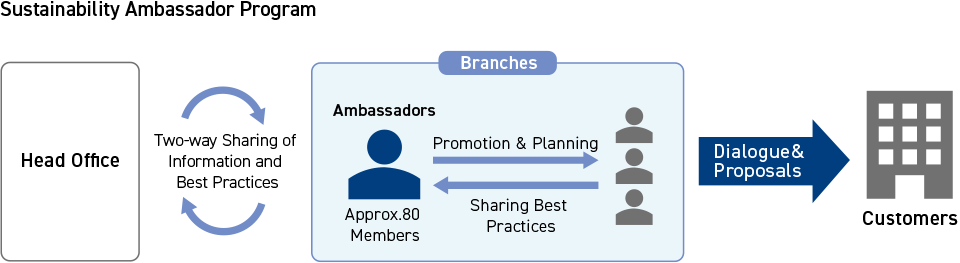
Since FY2024, the Group has appointed “Sustainability Ambassadors” in each sales branch of the Bank of Yokohama with the aim of improving internal sustainability literacy. Each ambassador serves as a hub for information sharing between the head office and sales branches, as well as between sales branches. By implementing measures to raise employees' awareness of sustainability and strengthen their proposal skills at each sales branch, the entire sales branch works with customers on their sustainability management initiatives.
Metrics and Targets Climate Change
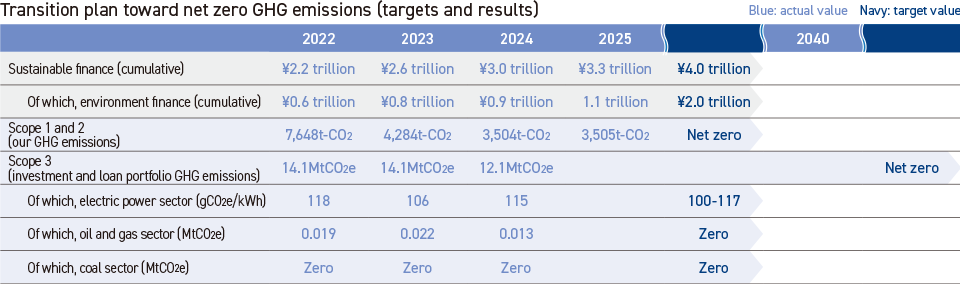
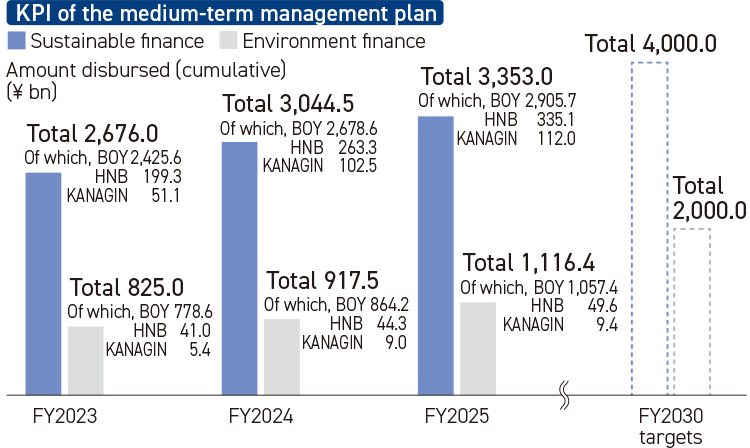
As a community-based financial institution, the Group recognizes its responsibility to play a leading role in decarbonizing local communities. Based on this recognition, we have positioned “conserving and preserving the environment” as materiality, and have set cumulative disbursement targets for sustainable finance and environment finance, and GHG emissions reduction in our own operations as “long-term sustainability KPIs” (targets to be achieved by FY2030). We also have set a net zero by 2050 target for GHG emissions in the investment and loan portfolio and interim targets for the electric power, oil and gas, and coal sectors for FY2030 in order to actively promote the decarbonization of local customers.
For GHG emissions, calculations are made for Scope 1 and 2 and categories 1 to 15 of Scope 3, and the calculation results have been subjected to third party verification by the Japan Quality Assurance Organization. We will continue to improve and refine our calculation methods
Sustainable finance and environment finance
Cumulative disbursements of sustainable finance in FY2025 totaled ¥3.3 trillion, of which ¥1.1 trillion was disbursed in environment finance.
In addition to an increase in demand for funds due to an increase in capital investment aimed at decarbonization, there is a need for new financial products and services. We will continue to enhance our lineup of solutions that will help solve our customers’ issues and provide optimal solutions tailored to our customers’ needs.
GHG emissions from our own business activities
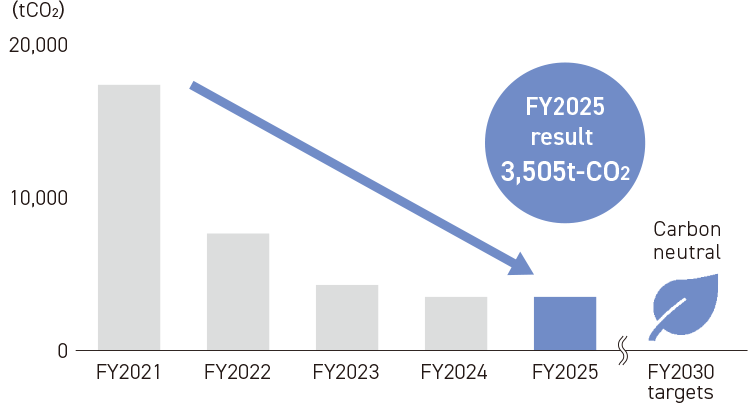
In FY2025,*1 GHG emissions (Scope 1 and 2) from the Group’s business activities totaled 3,505 t-CO2, representing an 88% reduction from FY2013.*2 The Group is working to achieve its targets through initiatives such as introducing energy-saving equipment, switching its electricity contracts to effectively renewable energy, and installing solar power generation systems at properties owned by the Group.
- *1Total for the domestic offices of the Company and its consolidated subsidiaries.
- *2Total for the Bank of Yokohama, the Higashi-Nippon Bank, THE KANAGAWA BANK, and Hamagin Tokai Tokyo Securities.
GHG emissions in the investment and loan portfolio (Sectors with GHG emission reduction targets set)
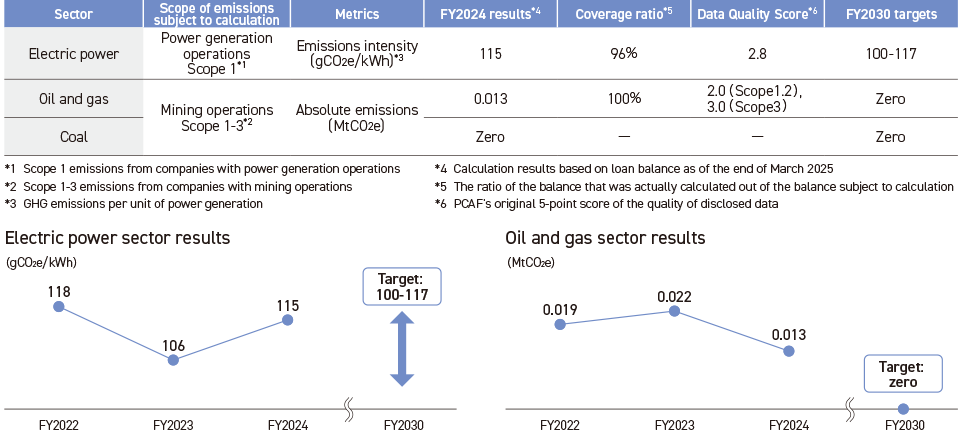
In FY2024, we set GHG emissions reduction targets in the electric power, oil and gas, and coal sectors. In the electric power sector, the start of operation of a thermal power plant in Japan and other factors led to a year-on-year rise in emission intensity, but it remained within the target range. In the oil and gas sector, emissions decreased year on year due to a decrease in the balance of loans to companies subject to calculation.
We have selected coal-fired power generation, coal mining, and oil and gas extraction as specific sectors for sector policy and stipulate that transactions are carefully deliberated. For customers in sectors for which we have set GHG emissions reduction targets, we support the visualization and reduction of their GHG emissions through detailed engagements on an individual company basis.
We will continue to support customers’ efforts to decarbonize their operations by providing optimal solutions based on careful engagement with customers.
Strategy / Metrics Nature-related
The lives of people and the activities of companies depend on and impact the natural capital of water, air, land, and plants and animals. Because the entire upstream and downstream value chain of business transactions is dependent on and impacts natural capital, companies need to consider both their own operations and the entire value chain when dealing with natural capital.
Financial institutions are linked not only to their own business activities (mainly sales activities at each location), but also to the activities of customers and their supply chains through investment and financing activities. In addition to identifying the relationship between the Group's operations and natural capital, we are also working to identify the “dependency” and “impact” on natural capital of our clients through our investment and financing activities and to appropriately manage risks. At the same time, we are working to seize business opportunities by providing financial products and services related to natural capital.
Interrelationships among environmental issues
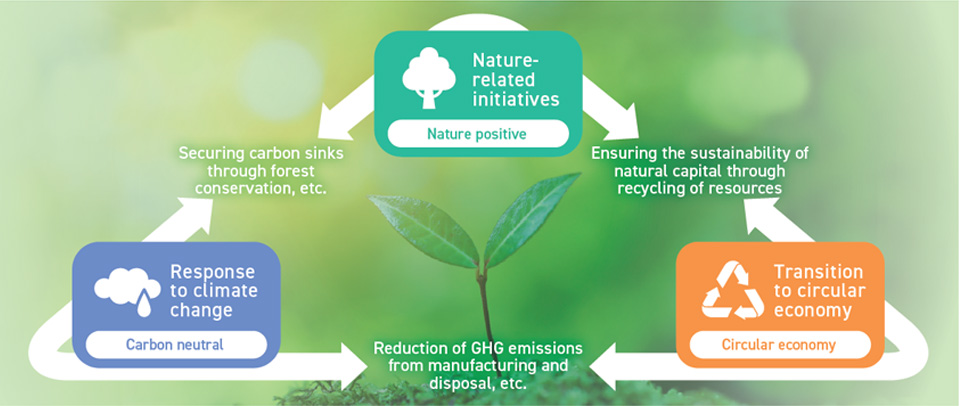
We recognize that environmental issues are closely interrelated and must be dealt with in an integrated manner. Therefore, rather than addressing "nature-related initiatives" separately, we are promoting initiatives that will lead to the creation of synergies, while striving to avoid trade-offs, based on the interrelationships with "response to climate change" and "transition to a circular economy."
Understanding nature-related risks
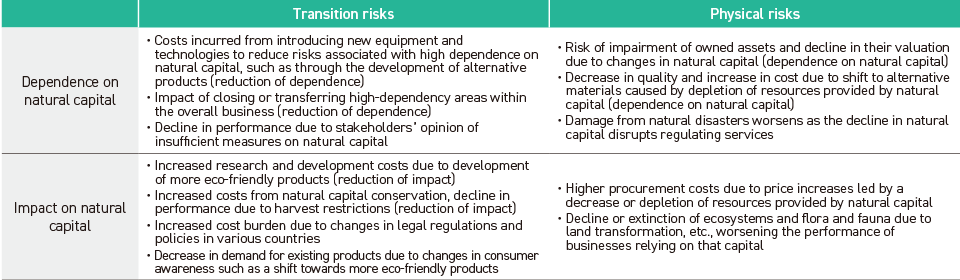
In order to understand the relationship between our business and natural capital, our group first organized the nature related risks of our customers from the perspectives of dependency and impact. The risks we have identified are preliminary, based on our current analysis. We aim to deepen our understanding of the links between our customers and natural capital and how they depend on and impact each other. This will help us more accurately identify potential risk events and enhance our risk awareness.
Analysis of dependency and impact in the investment and loan portfolio
In order to understand the relationship with natural capital through its investment and financing activities, the Group used “ENCORE”*1 to analyze the dependence and impact on natural capital in each sector*2. The analysis revealed a high degree of dependence on ecosystem services related to water across sectors, as well as a high degree of impact on natural capital from water use and air pollution. In addition, we narrowed down the sectors that require priority measures (priority sectors), such as the “Materials” and “Food and beverages” sectors, which have a particularly high degree of dependence and impact and are highly weighted in the Group’s portfolio.
In the future, we will identify risks and opportunities for the Group by conducting in-depth analysis of priority sectors (value chain analysis, location analysis, etc.) and assessments of nature-related risks and opportunities, taking into account the relationship with the target sector and the importance in the region.
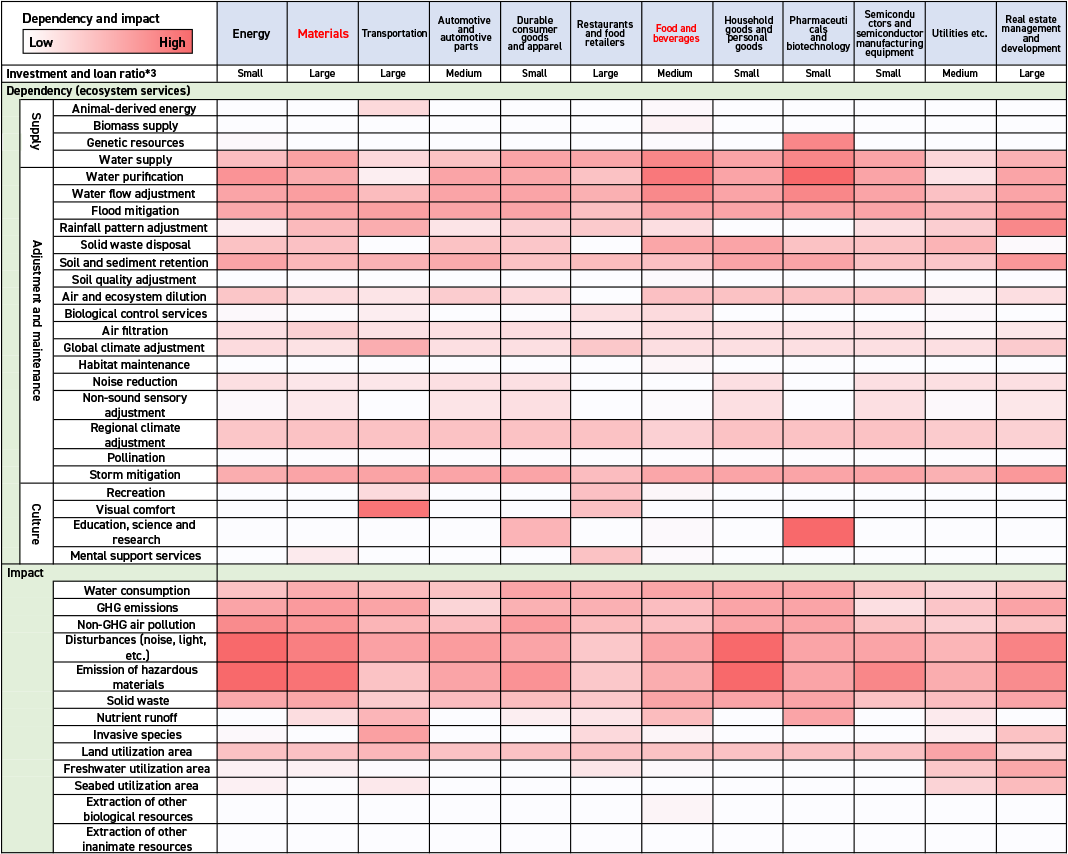
- *1A tool to understand the degree of dependence and impact on nature of specific economic activities
- *2Based on the analysis of the entire portfolio and with reference to the TNFD’s guidance for financial institutions, etc., the above table shows the results of the analysis of sectors with particularly high dependency and impact.
- *3Percentage of total investments and loans (as of the end of March 2025) (large: over 3%, medium: 1% - 3%, small: less than 1%)
Nature-related initiatives through investment and financing activities
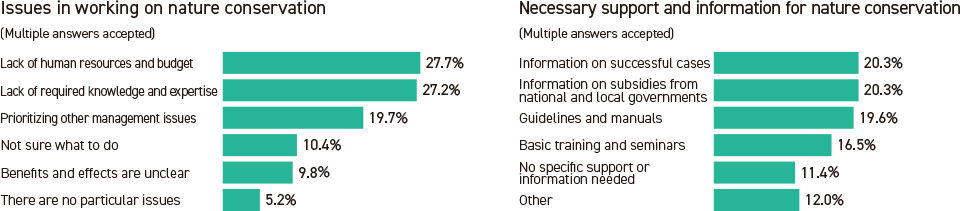
In order to understand the relationship with natural capital through its investment and financing activities, the Group analyzes the degree of dependence and impact on natural capital in customers’ businesses. As a result of analysis using “ENCORE”*1, it was confirmed that the degree of dependence and impact on water resources is high across sectors, and the sectors that require priority measures (priority sectors) were narrowed down.
Based on these results, we conducted a survey on natural capital for customers in the foods and beverages, automotive and auto parts, and metals and mining sectors, comprehensively considering the degree of dependence and impact on natural capital among the investment and loan portfolio companies of the Bank of Yokohama, as well as the composition ratio in the Group's portfolio and the status of engagements on decarbonization.
In the future, we will use the analysis results of the survey to provide optimal solutions to support our customers' initiatives to become nature positive*2.

Survey results (1) - Understanding customers’ issues and needs
In terms of issues in working on nature conservation, top responses were a lack of "human resources and budget" and "knowledge and expertise," as well as prioritizing other management issues. This suggests that a lack of resources for system development, securing expertise, and management prioritization are major bottlenecks. As for the necessary support and information, in addition to successful cases, information on specific implementation methods and measures to reduce the burden of costs, such as subsidy information and guidelines, is expected.
Survey results (2) - Understanding the relationship between customers' businesses and natural capital
In all three sectors, awareness of the degree of dependence and impact tends to be higher for natural capital that is more directly related to the operations of the company's businesses. On the other hand, there are differences in awareness among sectors regarding natural capital that has an indirect relationship with operations or is likely to become apparent in the upstream supply chain. In comparison with “ENCORE”*1, respondents' awareness of dependence and impact related to water exceeded that of “ENCORE”*1, suggesting that respondents may have a strong perception of water risks in their operations.
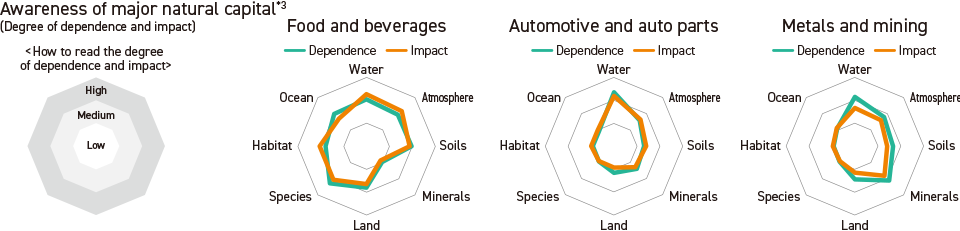
- *1A tool to understand the degree of dependence and impact on nature of specific economic activities
- *2Initiatives to stop and reverse the loss of nature and to achieve a society in harmony with nature
- *3Water, atmosphere, soils, minerals, land, species, habitat, ocean
Nature-related initiatives in our business activities
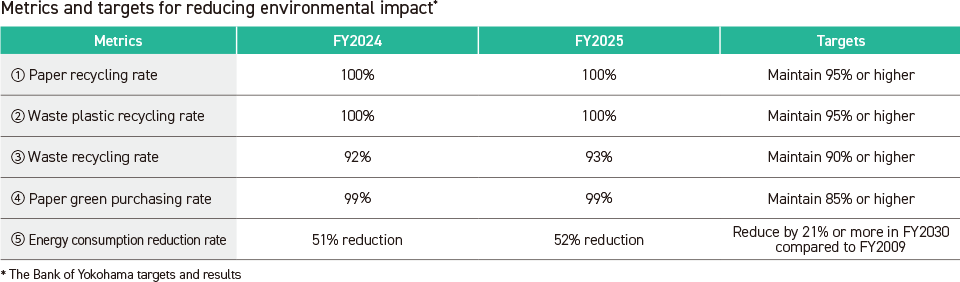
Based on our Group Environmental Policy, we are working to reduce our environmental impact by promoting resource and energy saving and waste recycling. At the Bank of Yokohama, the Higashi-Nippon Bank, and THE KANAGAWA BANK, we are working to reduce our environmental impact by setting targets for recycling rates of paper, waste plastics, and waste materials, green purchase rates of paper, and the reduction rate of energy consumption. At the same time, in cooperation with local governments and other organizations, we are promoting activities that contribute to the conservation and restoration of the local natural capital and efforts to shift to a circular economy.
In addition, the Bank of Yokohama aims to contribute to the development of sustainable regional communities through co-sponsorship of the International Horticultural Expo 2027 (GREEN×EXPO 2027), which will be held in City of Yokohama in 2027. For details of this initiative, please refer to "Contributing to Regional Economies"
-
Sustainability
- Sustainability of the Group
- Sustainability Promotion Structure・Materialities
- Stakeholder Engagement
- Environment
-
Social
- Group Human Rights Policy
- Group Social Contribution Activity Policy
- Sustainable Growth of Local Businesses
- Solving the Problems of an Aging Society with a Declining Birthrate
- Contributing to the Growth of Local Economies
- Forming a Digital Society
- Human Capital Management(Human Resource Strategy)
- Respect for Human Rights
- Governance
- Sustainability Library
- Group Non-Financial Data